
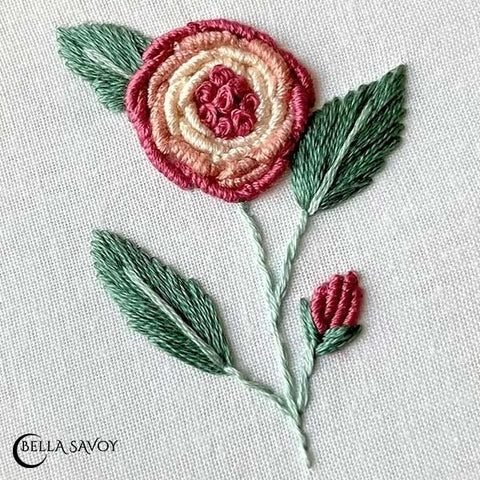
🖤 This step-by-step bullion stitch tutorial will show you exactly how to stitch this beautiful, raised flower embroidery stitch, adding rich texture and dimension to any embroidery project.
The bullion stitch—sometimes called the bullion knot—is a wrapped stitch that forms a smooth, rope-like coil. It’s perfect for creating tiny buds, bullion roses, wheat grains, textured hair, and other intricate details. It might look intimidating at first, but with a little practice, you’ll pick it up quickly.
At first glance, this embroidery technique can look like a simple straight stitch with extra “puff.” Some stitchers lovingly call it the little worm stitch because of its curled shape. But don’t let that scare you off. Once you understand the wrapping motion and get a feel for the tension, this stitch becomes incredibly satisfying—and surprisingly meditative.
That said, the bullion knot stitch isn’t considered a beginner stitch. Like the popcorn lazy daisy stitch, it requires both hands, steady coordination, and a bit of patience.
If you’re brand new to embroidery, you may want to start with foundational stitches first. But once you’re comfortable holding your needle while wrapping thread, this intermediate embroidery stitch opens up so many creative possibilities.
And if you’re a visual learner—don’t worry. A full bullion stitch video tutorial is included at the end of this guide so you can watch the entire process in real time.
Let’s dive in!
Table of Contents
Tips for a Smooth Stitch
The bullion stitch works best with high-quality embroidery threads such as DMC. Their smooth, firm texture makes it easier for your thread to glide through your wraps without snagging.
Because this stitch requires you to wrap the thread around your needle and pull the needle through the wraps, choose a needle with a slim profile at the eye. A bulky needle eye makes the pull-through much harder.
I personally use standard DMC embroidery needles without issues, mostly because their eyes aren’t too wide and I’ve learned not to wrap too tightly. But if you find yourself struggling, switch to a milliner’s (straw) needle—its uniform width makes it ideal for stitches like bullion knots.
You can work this stitch in any direction. For this embroidery stitch tutorial, we’ll make one going up and down so you can clearly follow the technique.
Bullion Stitch Tutorial (Step by Step)
1. Form a loose base stitch
Come up through the fabric and insert your needle back down a stitch-length away—but don’t pull the thread tight. Leave a very loose stitch sitting on the surface.
2. Bring your needle back up
Bring the needle up again at or very near the starting point. Stop when the needle is halfway through the fabric.
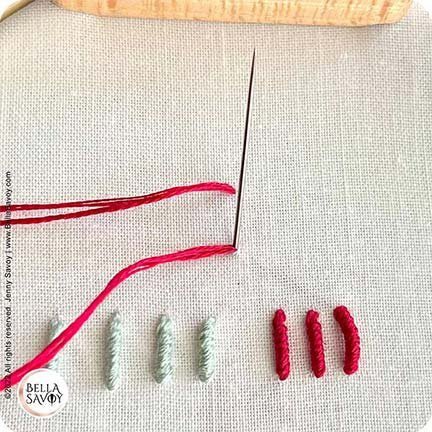
3. Hold your needle steady
Hold your needle from underneath with one hand so it stays firmly in place.
4. Begin wrapping the thread
With your free hand, pick up the working thread and wrap it several times around the needle shaft.
It doesn’t matter which direction you wrap—just make sure the wraps are neat and not too tight. Your thread needs enough room for the needle to pass through.
5. Check the length of your wraps
Slide the wraps gently down the needle toward the fabric to see how long your stitch will be.
Add more wraps if needed—more wraps create a longer or more curved bullion stitch.
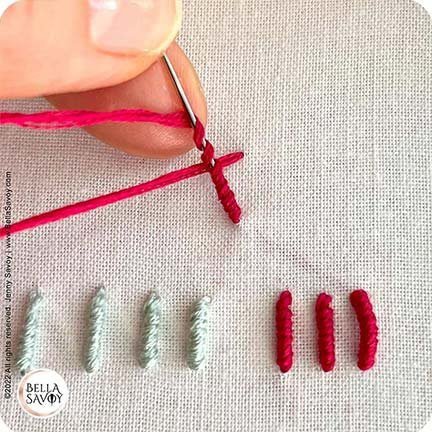
6. Pull the needle through the wraps
Here’s where things get a little tricky:
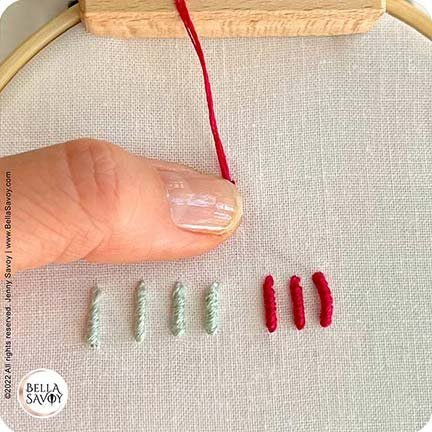
Pinch the wraps firmly but gently between your fingers and slowly pull the needle through.
As you pull, hold the wrap in place with your other hand to prevent unraveling or twisting.
If the wraps start to loosen or shift, use your fingernails to guide them back into alignment.
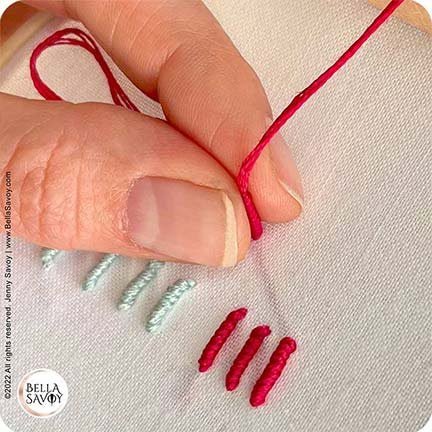
7. Settle the stitch
Continue pulling until the wrapped thread sits snugly against the fabric. Slow, steady movements help maintain the stitch’s shape and tension.
If the needle feels stuck, gently twist the wrap—not too much—just enough to loosen it.
8. Adjust and secure
If any wraps fall out of place, don’t panic. Use the tip of your needle to nudge them into a smooth, even coil.
To finish the stitch, take the needle down to the back of the fabric to secure it.
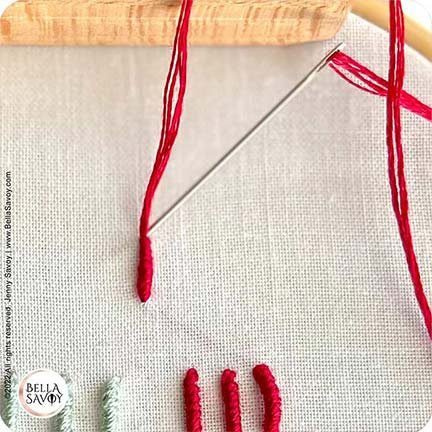
The first few bullion stitches you make might look a little wild, so don’t feel discouraged. This is a technique that rewards patience. Once your hands learn the rhythm, the stitch becomes incredibly enjoyable—and very addictive.
For a beautiful floral effect, try making a cluster of french knots and then work bullion knots around them to form a soft, spiraled bullion stitch flower. This is one of my favorite ways to embroider roses. You can also experiment with wrap counts to create a mix of textures and curves.
Ideas & Embroidery Inspiration
The bullion stitch is one of the most versatile textured stitches in hand embroidery. Here are a few ways to use it:
- Roses: Create a cluster of French knots in the center, then surround them with short bullion stitches to form realistic petals.
- Wheat grains or lavender sprigs: Long, slightly curved bullion knots make beautiful botanical elements.
- Hair texture: Multiple short bullions add dimensional curls or braids to portrait embroidery.
- Textured fills: Use alternating lengths of bullions to fill shapes with a rich, sculptural effect.
Once you get comfortable, you’ll find yourself adding bullion knots everywhere—they’re just that fun.
Video Tutorial
If you’re struggling to master the motion or want to see the wrap technique in action, watch my video tutorial below. Seeing the stitch in real time can help everything click.
FAQ
What is a bullion stitch used for?
It’s commonly used for floral motifs (like bullion roses), wheat grains, textured hair, tiny buds, and raised decorative details. Its coiled shape makes it perfect for dimensional embroidery.
Is a bullion stitch the same as a bullion knot?
Yes! The terms are often used interchangeably. Some patterns may also refer to it as a coil stitch or worm stitch.
Why do my bullion stitches look uneven or twisty?
Uneven tension, too-tight wraps, or using a needle with a large eye can cause issues. Try wrapping more loosely and switching to a milliner’s needle.
How many wraps should I use?
It depends on the look you want. Shorter wraps make tighter coils; more wraps create longer stitches or gentle curves.
Final Tip
If you add extra wraps, your stitch will naturally curve. If you want a more dramatic curve, simply increase your wrap count.
Happy stitching — 🖤